
Serbia holds strong potential for the development of the aerospace industry. This was clearly demonstrated by second-year Master’s students from the Department of Aerospace Engineering at the Faculty of Mechanical Engineering. Recently, they presented their final projects from the course “Aircraft Design” to a large audience. Through a range of innovative solutions – from agricultural aircraft and business jets to unmanned and sport aircraft – these young engineers proved they can play a key role in the modernisation of domestic aviation.
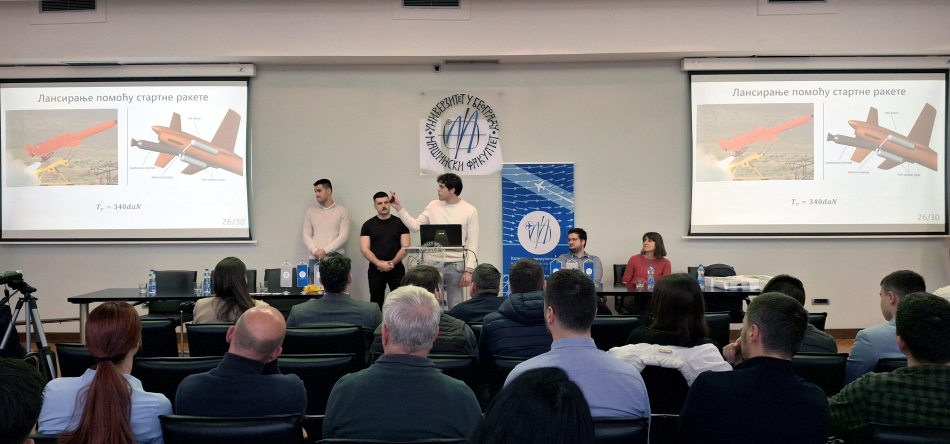
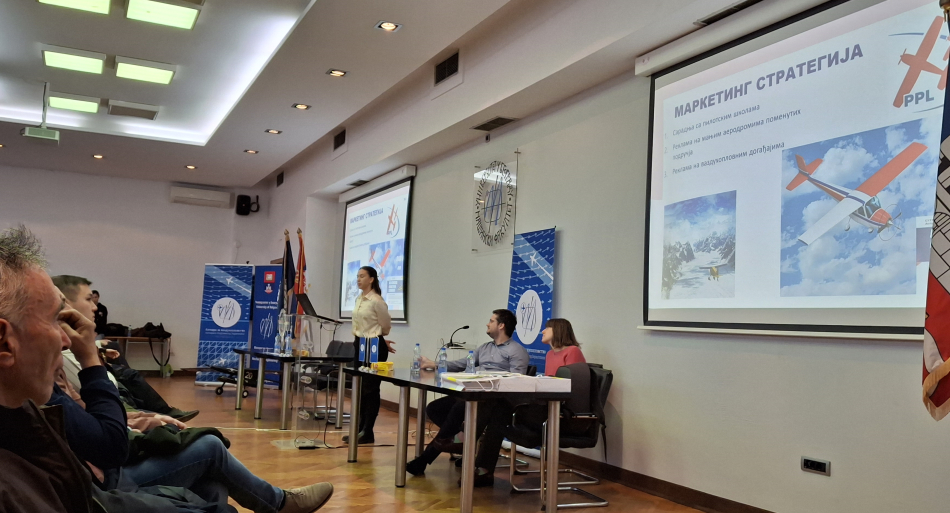
During the winter semester, students worked in teams to develop various aircraft concepts, applying knowledge across all stages of the design process – from defining technical requirements, through aerodynamic and structural calculations, to engine selection and cost estimation. Each team had limited time to present their work and demonstrate its competitiveness.
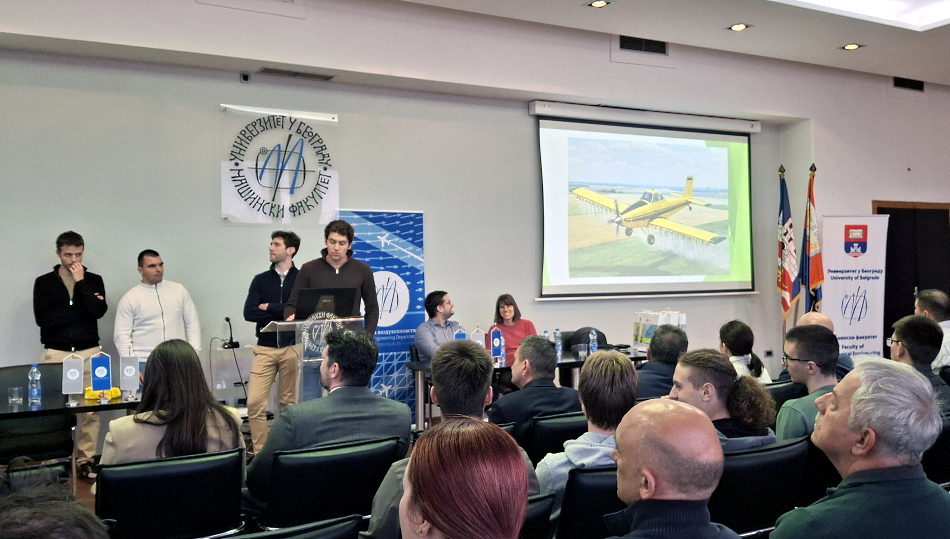
Among the standout projects was “Skakavac”, an agricultural aircraft designed for crop spraying. It is optimized for low-altitude operations and capable of covering large areas efficiently, using advanced sensor technologies such as LiDAR and radar systems to ensure safety and precision control.
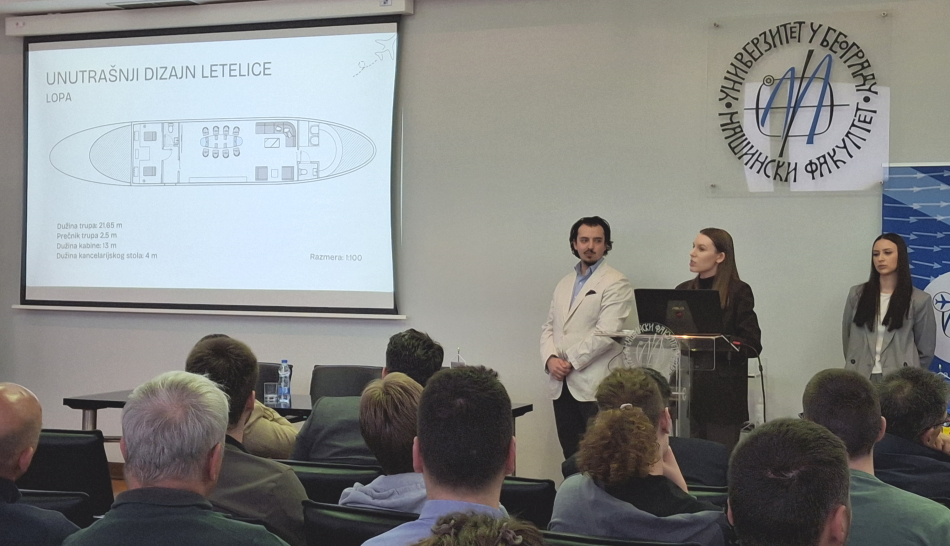
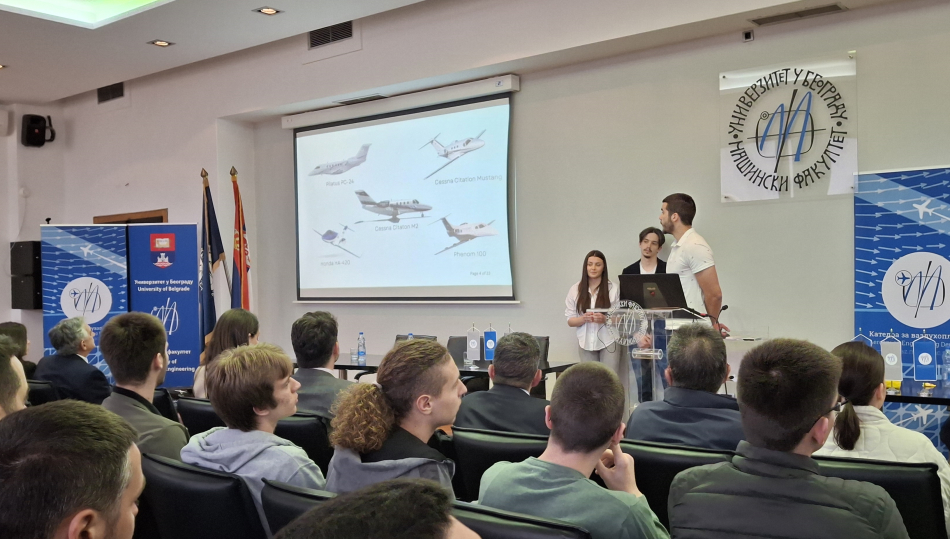
In the field of business aviation, two designs stood out. “Celestique” is a long-range jet intended for transoceanic flights, featuring a cabin configuration that supports in-flight work. Powered by turbofan engines, it is characterised by advanced aerodynamics and high performance. The second project, “Bulbul”, is a mid-size business aircraft with an optimised weight-to-range ratio. Thanks to a carefully selected airfoil and swept wing design, it achieves a high level of aerodynamic efficiency, directly reducing drag.
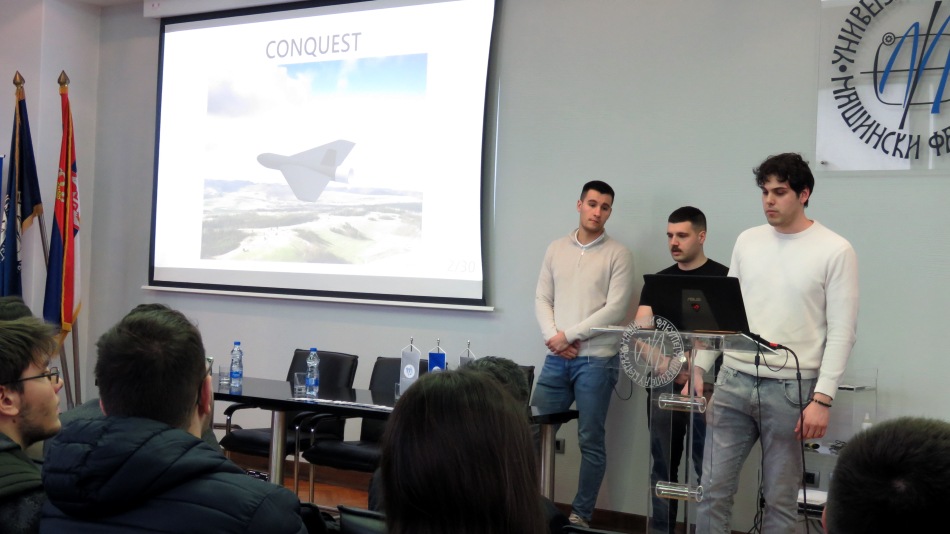
Particular attention was drawn to “Conquest”, an unmanned aerial vehicle (UAV) with stealth features, designed for long endurance and extended range. Built from composite materials, it is intended for specialised missions where durability and low observability are critical.
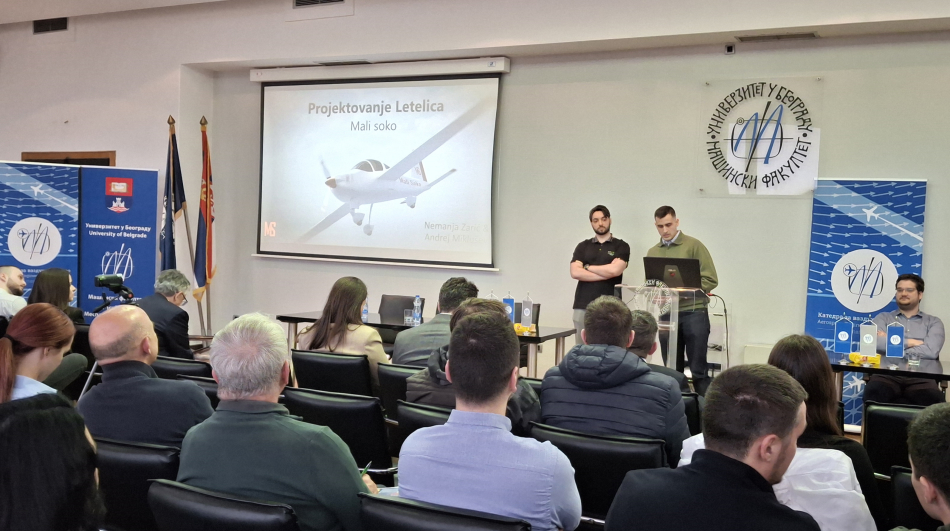
In the light aviation segment, “Mali Soko” was presented as a training aircraft for pilot education, with a strong focus on safety, stability, and solid short takeoff performance. Another project, “Rib”, is a multi-purpose aircraft adaptable to various conditions, including rough runways, making it especially suitable for rural environments.
Representatives of the aerospace industry praised the students’ creativity and technical expertise, while also offering valuable suggestion for further development. The event gathered more than 150 attendees, including students, professors, and representatives of relevant institutions and companies, confirming the importance of such initiatives for the future of aviation in Serbia.