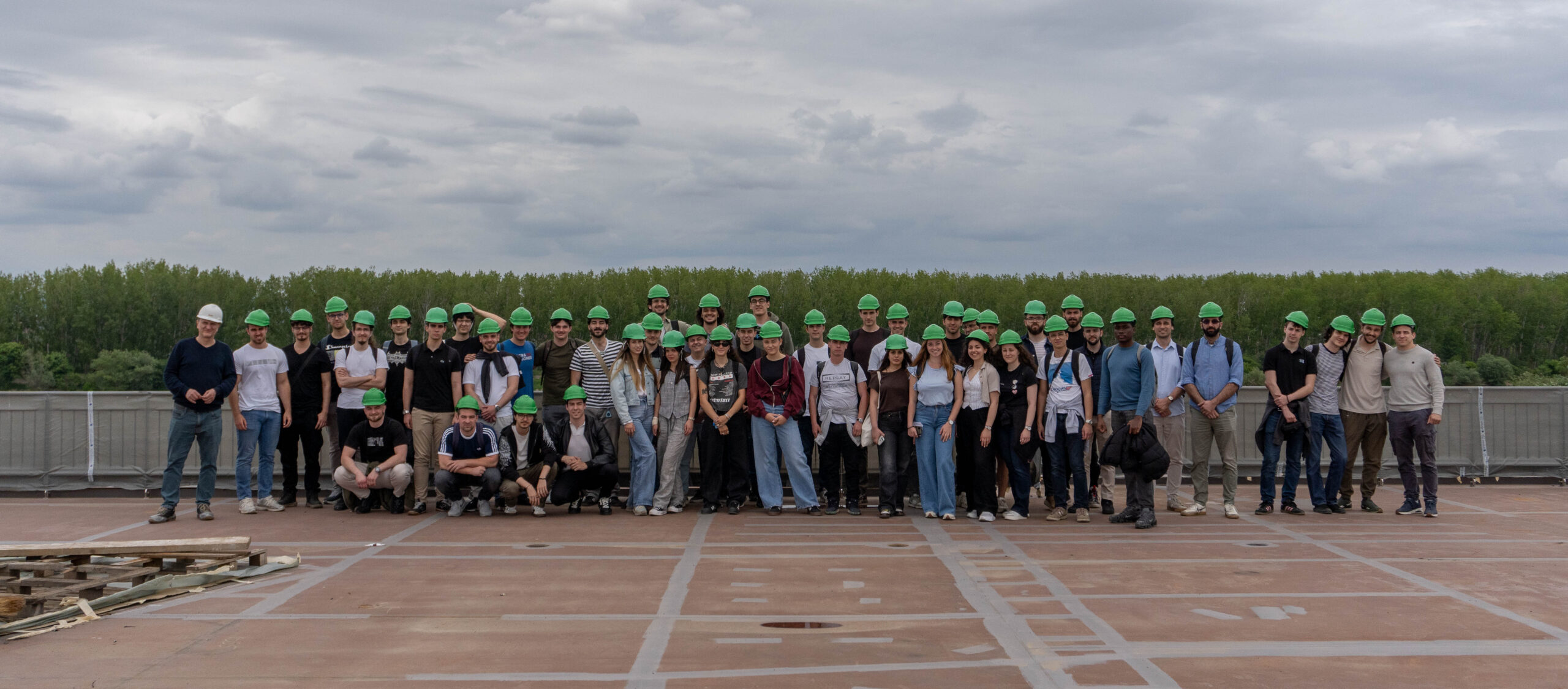
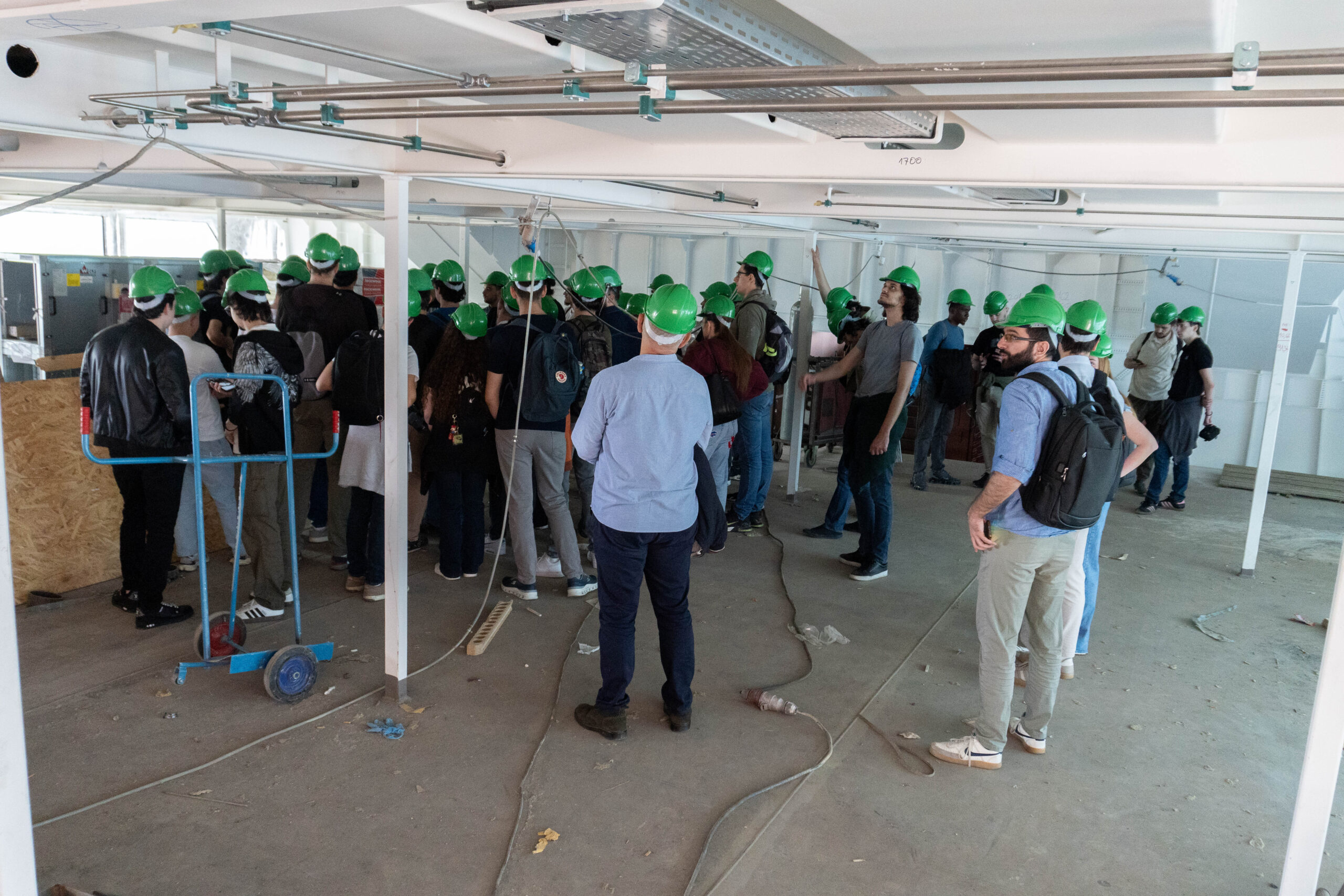
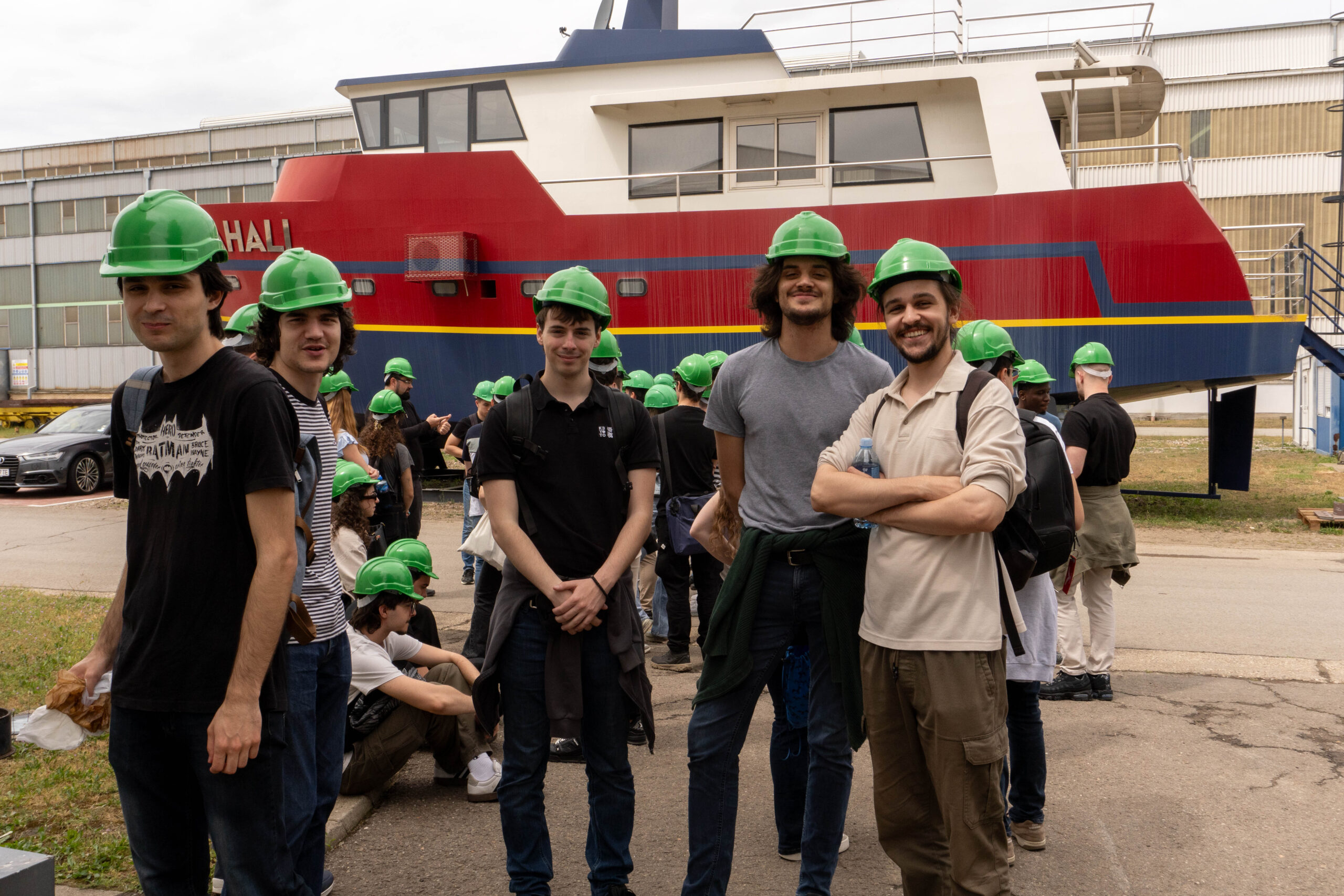
As part of the traditional annual study visit, students from the Department of Naval Architecture visited the “Vahali” shipyard in Zasavica near Mačvanska Mitrovica on May 7. The shipyard specialises in the construction of luxury river cruise vessels, which can frequently be seen sailing along the Danube or docked at the Belgrade passenger terminal below Kalemegdan Fortress.
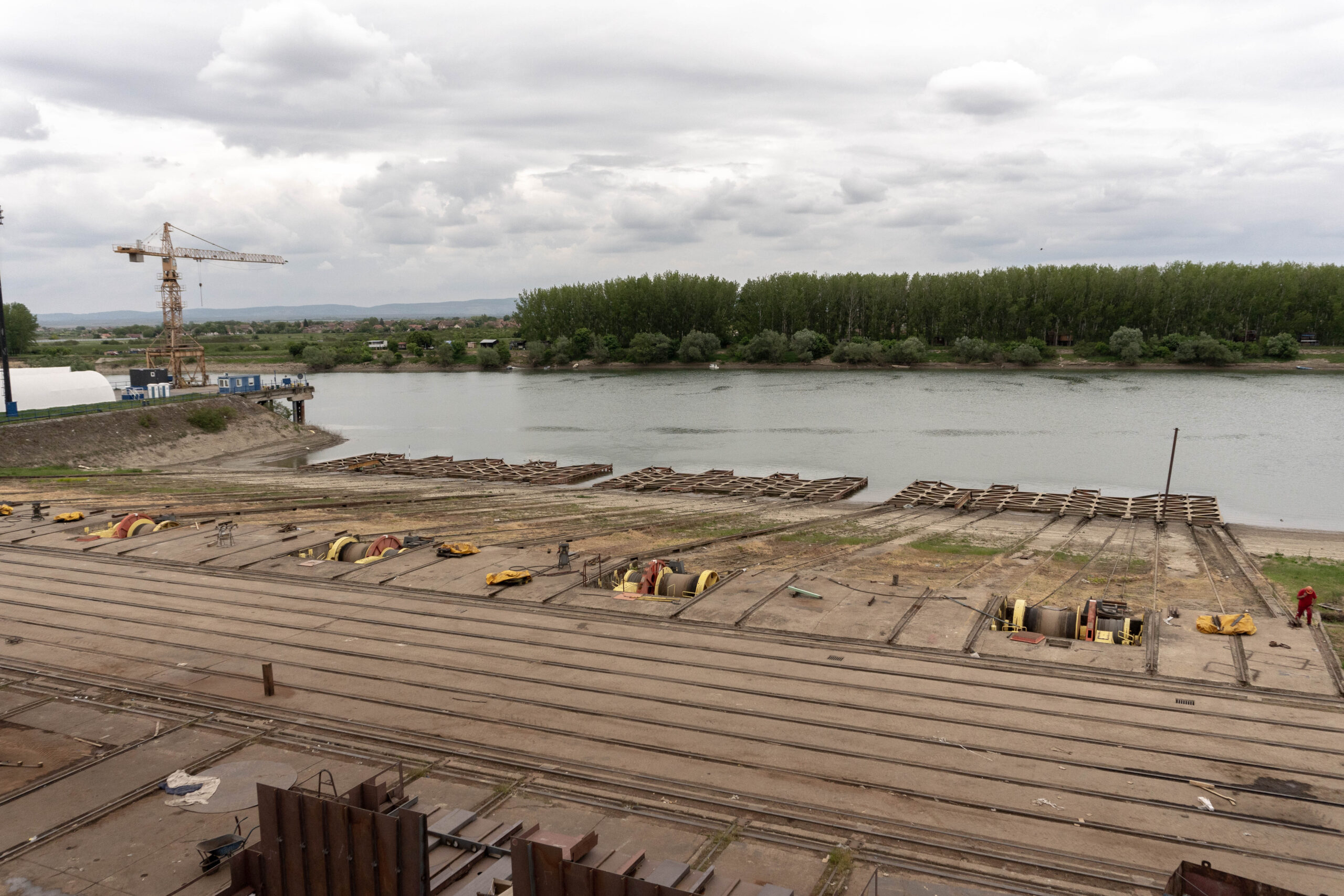
The Dutch-based shipbuilding company Vahali has been operating in Serbia since 2005 – initially at the former “Beograd” shipyard site in New Belgrade, and since 2013 it has been permanently based in Zasavica, where it took over the former “Sava” shipyard. This facility was built according to the original design and patented solution of a mechanised slipway with “pitless” lateral vessel transfer, developed by Professor Dr Branislav Džodžo from the Department of Naval Architecture.
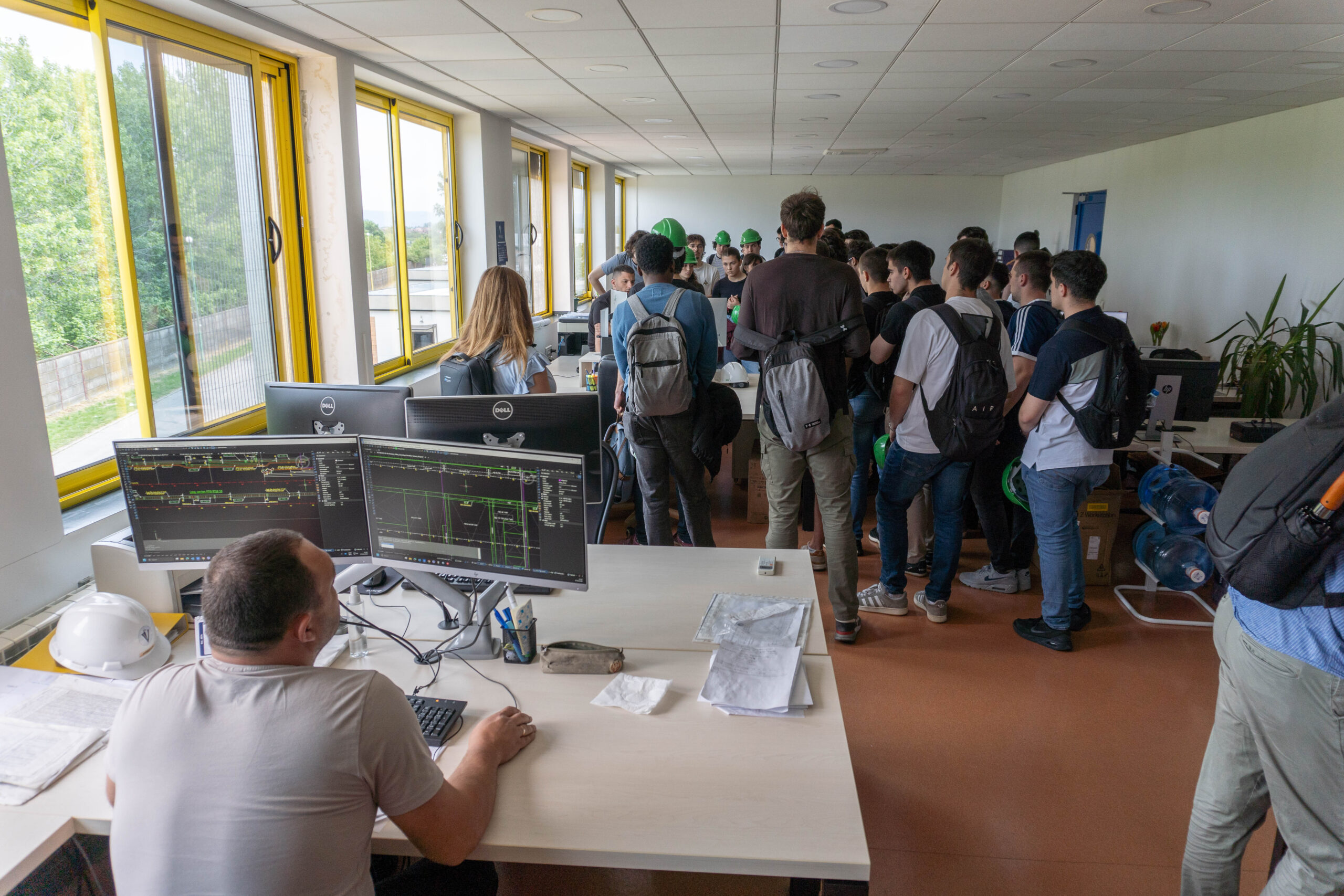
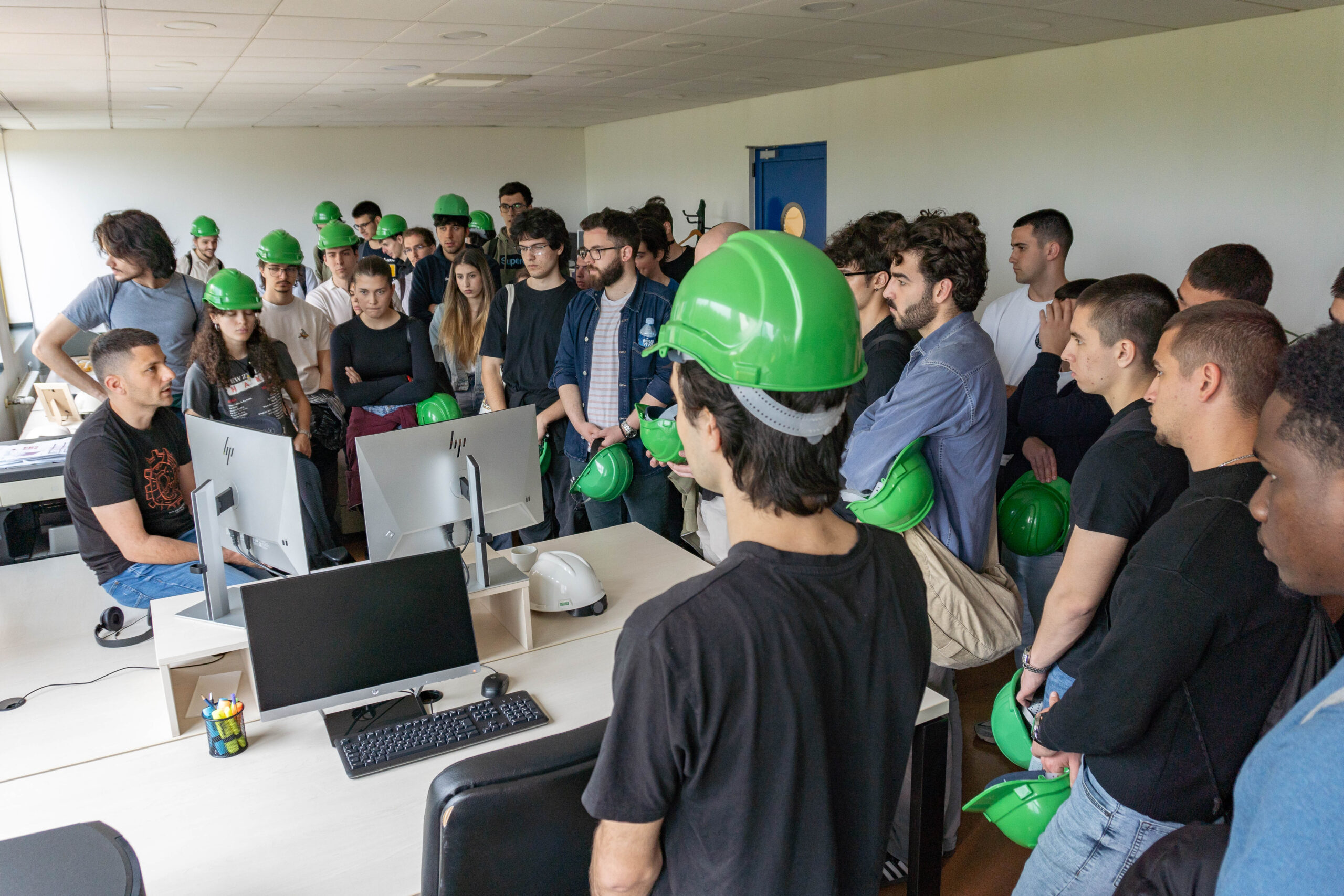
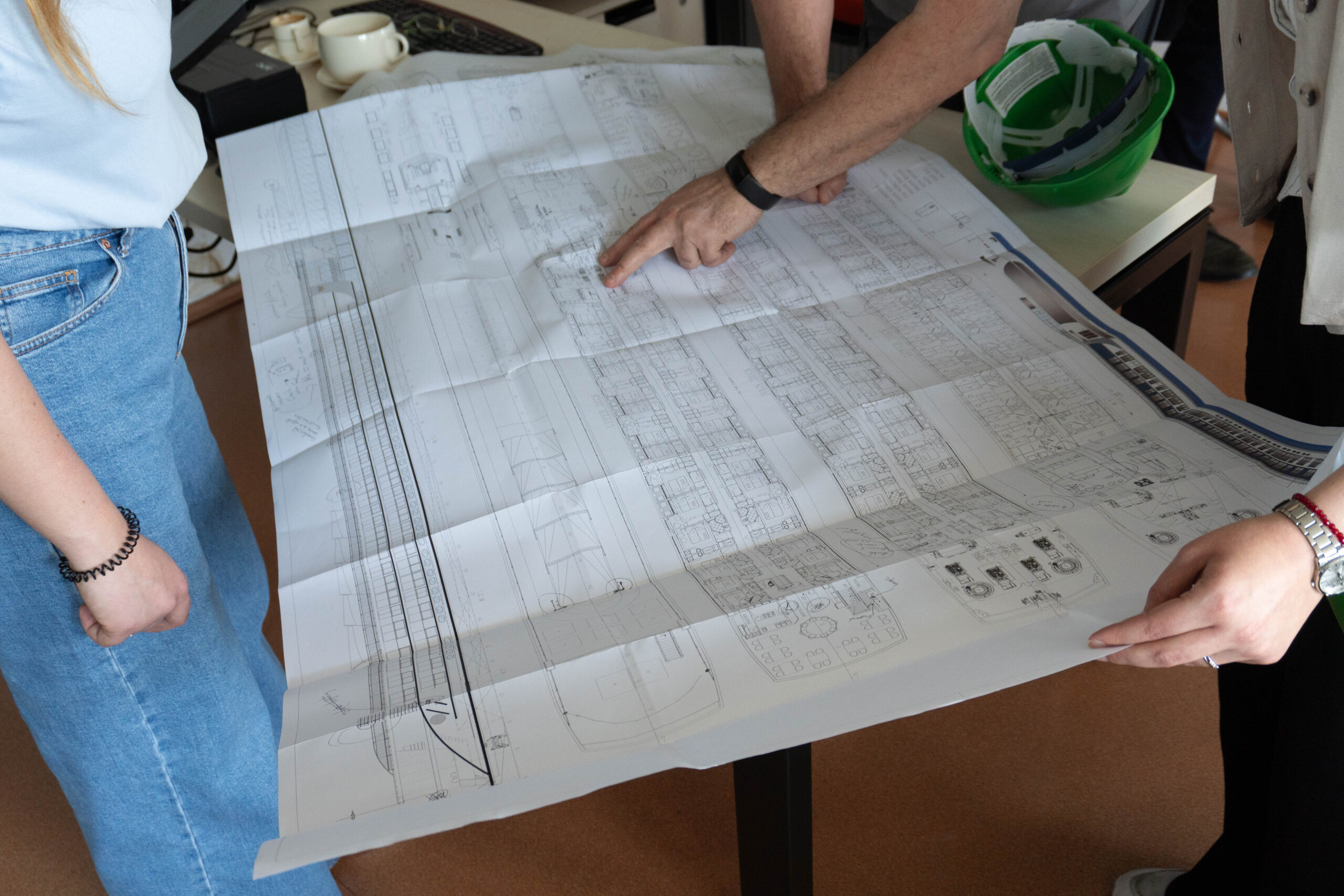
The visit began in the shipyard’s design office, where the students were welcomed by fellow naval architects. During the meeting, they had the opportunity to gain insight into everyday engineering challenges, as well as final design solutions. The tools presented included those used for 3D modelling, hydrostatics and stability calculations, scantling, the application of the finite element method, pipeline routing, preparation of workshop documentation, and planning of the entire machinery arrangement.
The students then toured the shipyard’s production halls. The timing of the visit was carefully chosen, as four vessels were simultaneously in different stages of construction.
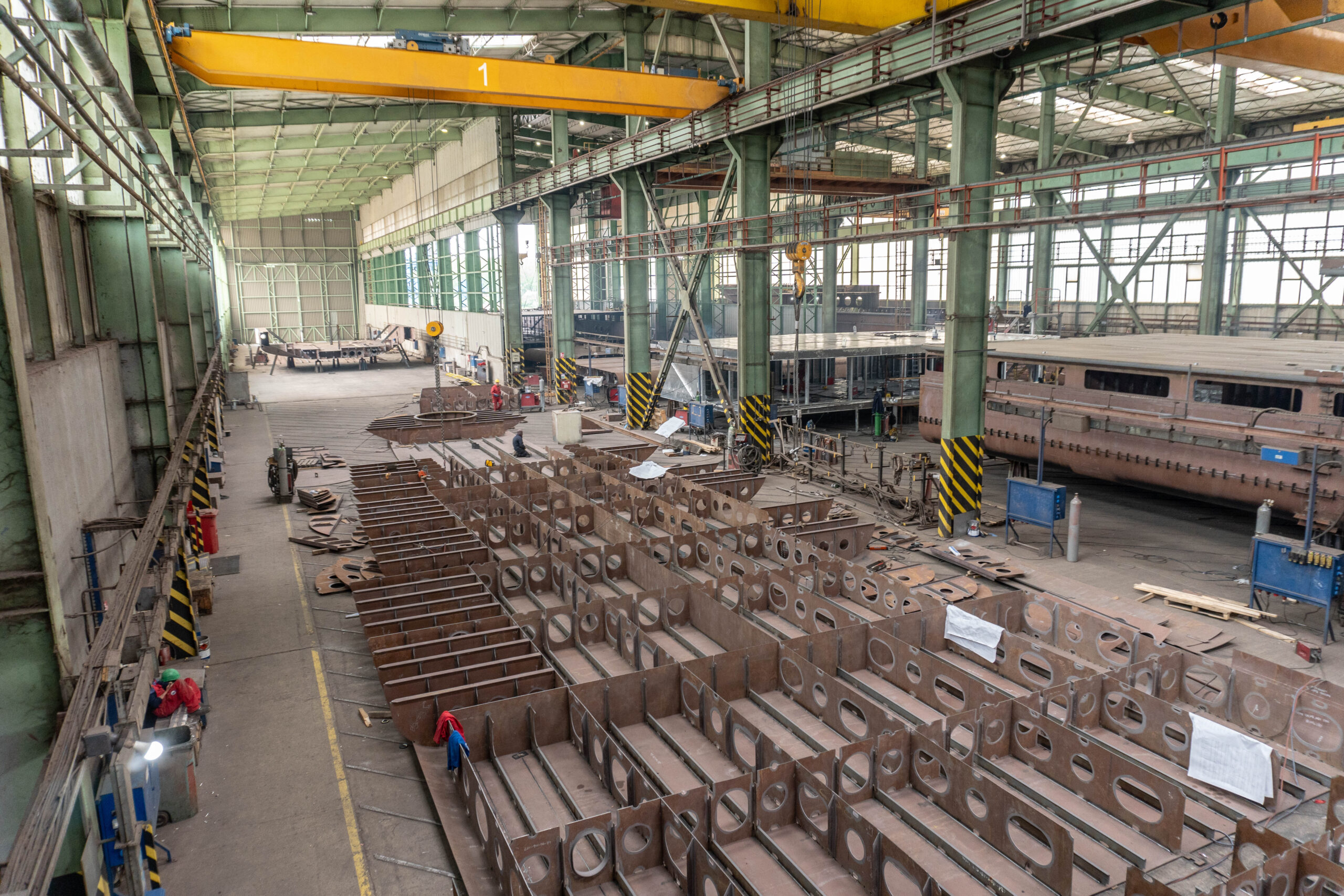
The first vessel was in the phase of plate and structural element fabrication. During this part of the visit, the students toured the material preparation and processing hall, where colleagues from the Department of Production Engineering, who joined the visit, further explained and supplemented the students’ knowledge in the fields covered within the courses Manufacturing Technology and Shipbuilding Technology.
The second vessel was in the section assembly phase in the main production hall. Future naval architects had the opportunity to gain a more detailed insight into the structure of ship hulls and the elements studied within the course Ship Structures.
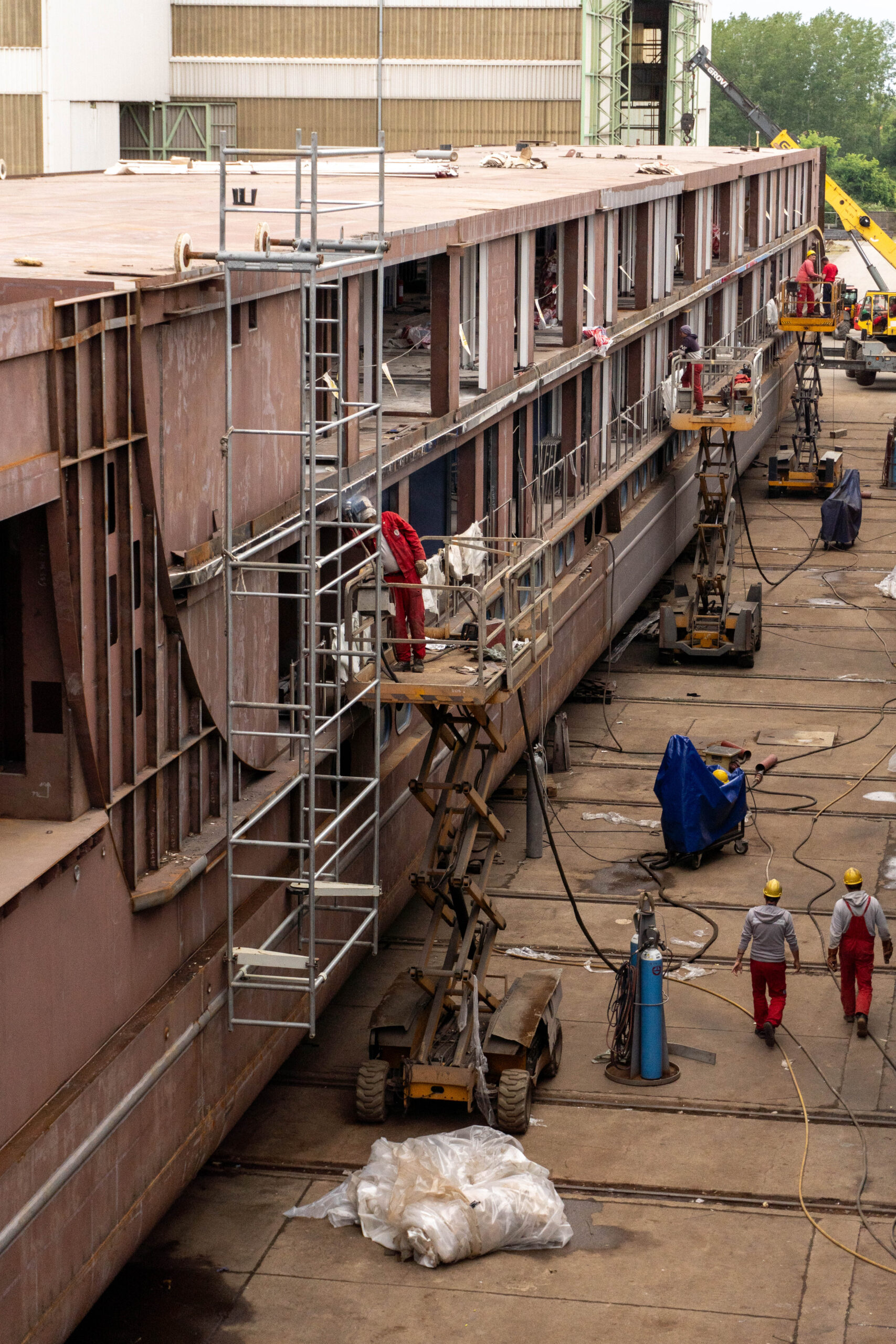
The third vessel was in the initial phase of outfitting and application of protective coatings. At this stage, the outlines of the passenger cabins were already visible, while partition walls, pipelines and other installations were simultaneously being installed in accordance with the previously prepared design. In addition, the engine foundations and the entire engine room were being prepared for the installation of the propulsion system.
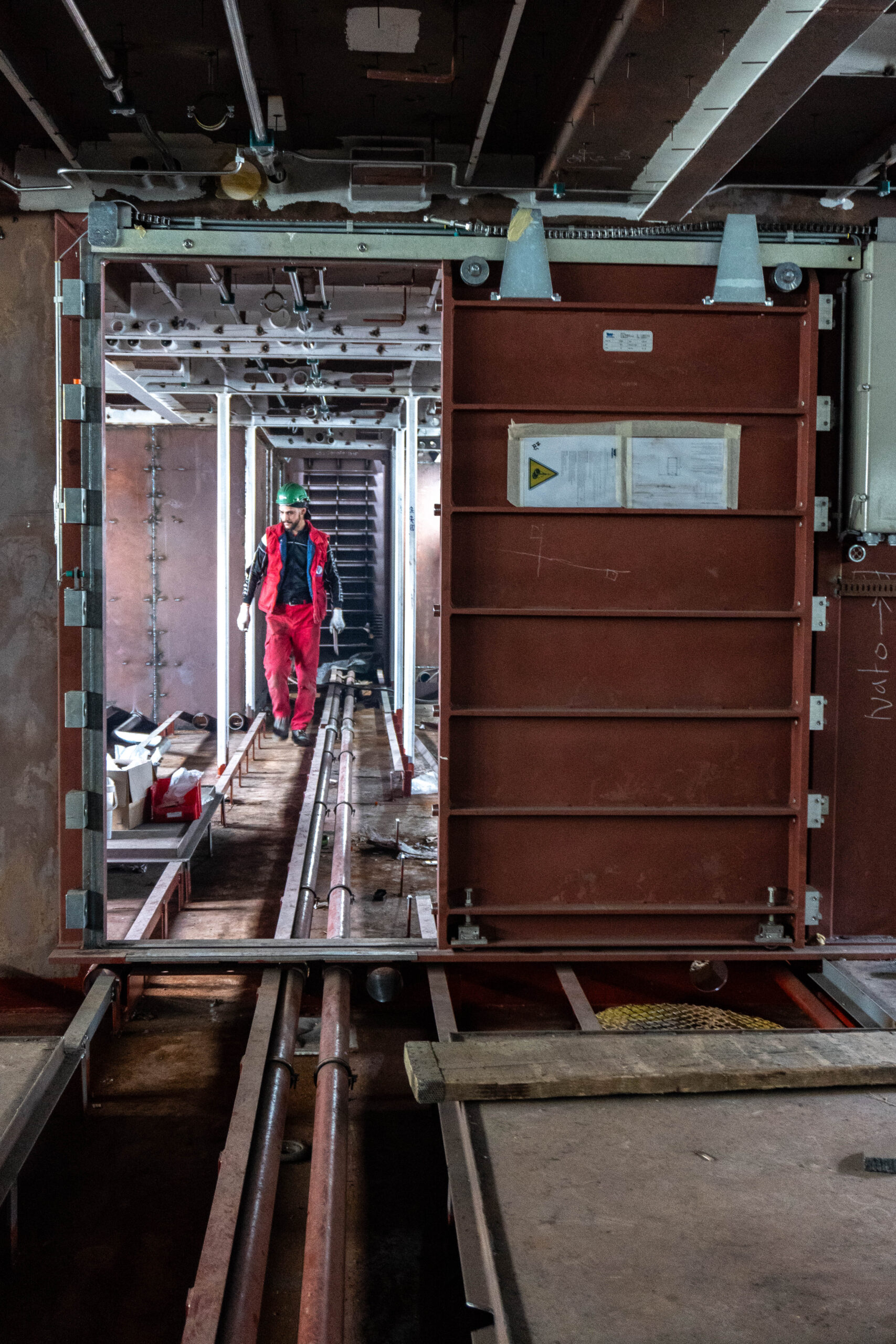
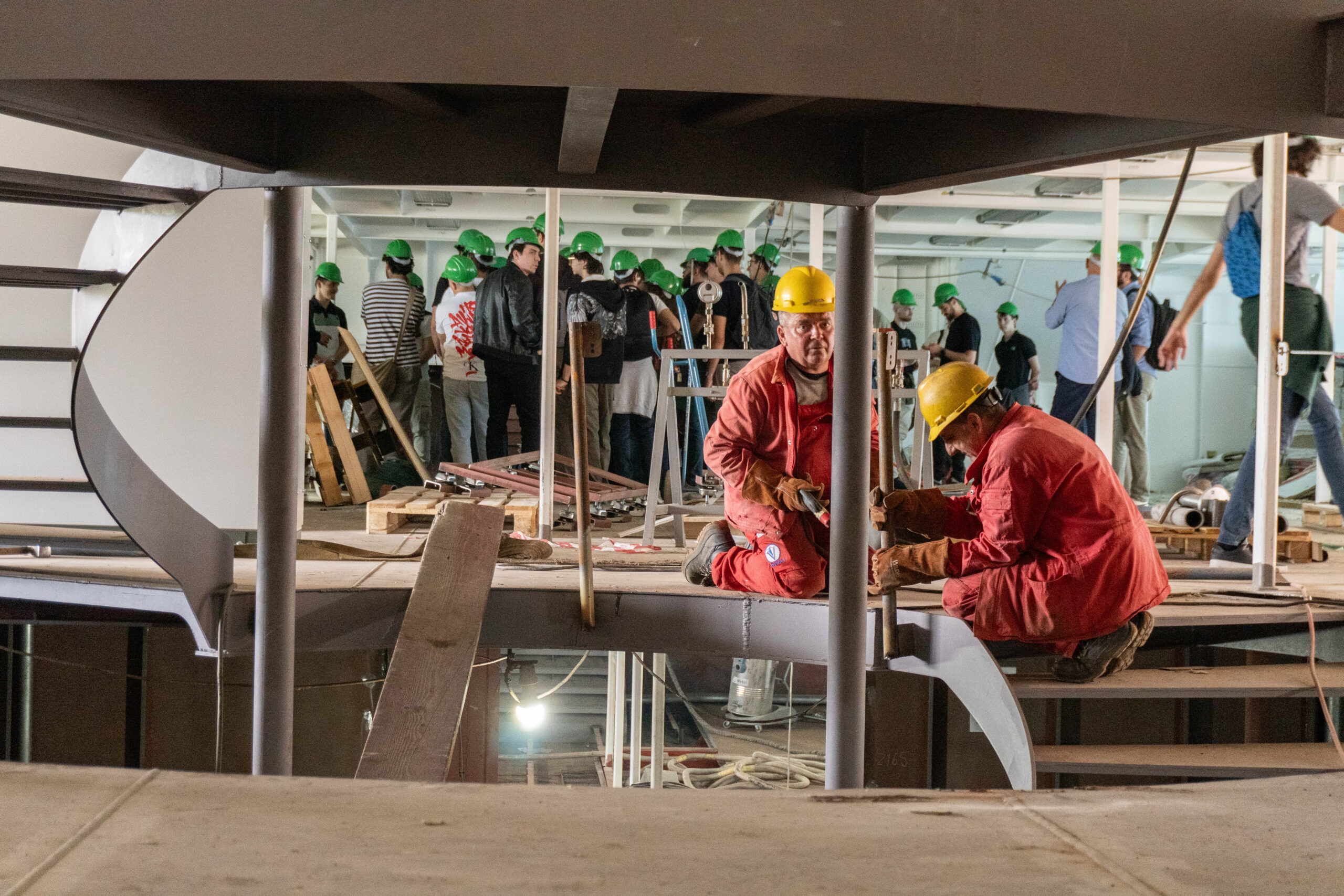
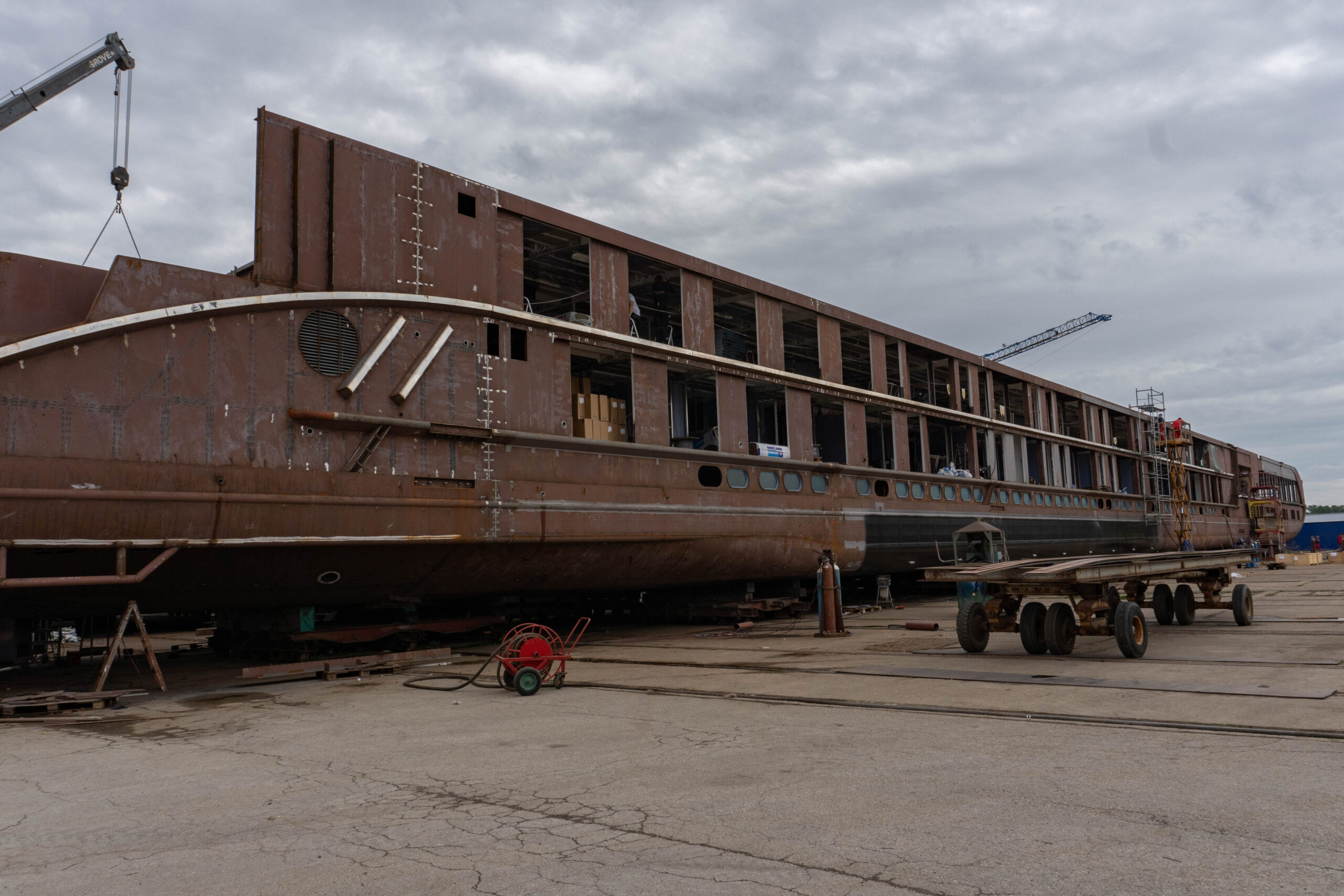
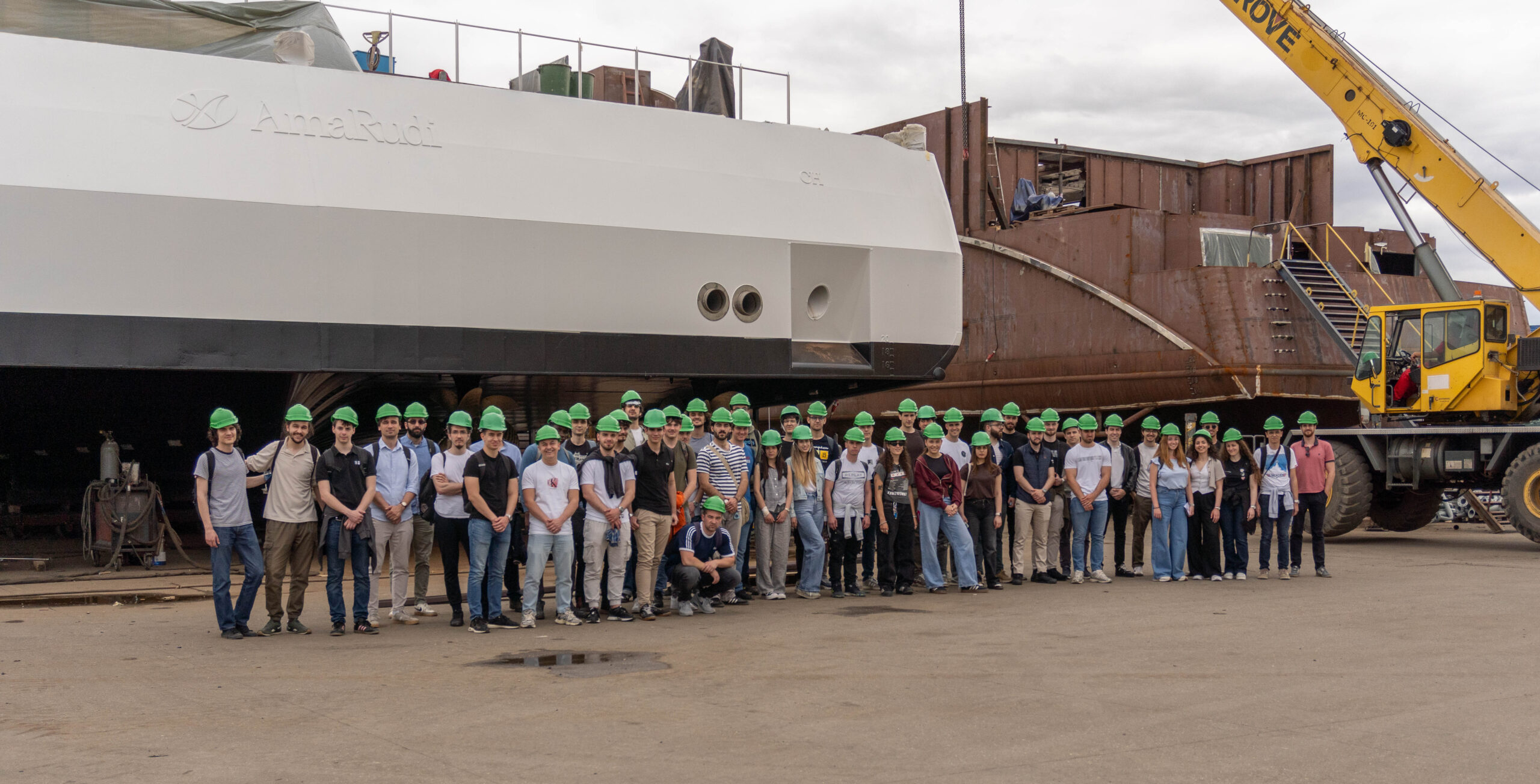
Particular attention was drawn to the fourth vessel, named “AmaRudi”, a sister ship to the “AmaMagna” – currently the largest river cruise vessel on the Danube, measuring 135 metres in length and 22 metres in width, which is approximately twice the usual width of river vessels. The students toured all decks of the vessel, from the inner bottom to the sun deck, as well as the passenger cabins, gaining an impression of the spaciousness and accommodation capacity.
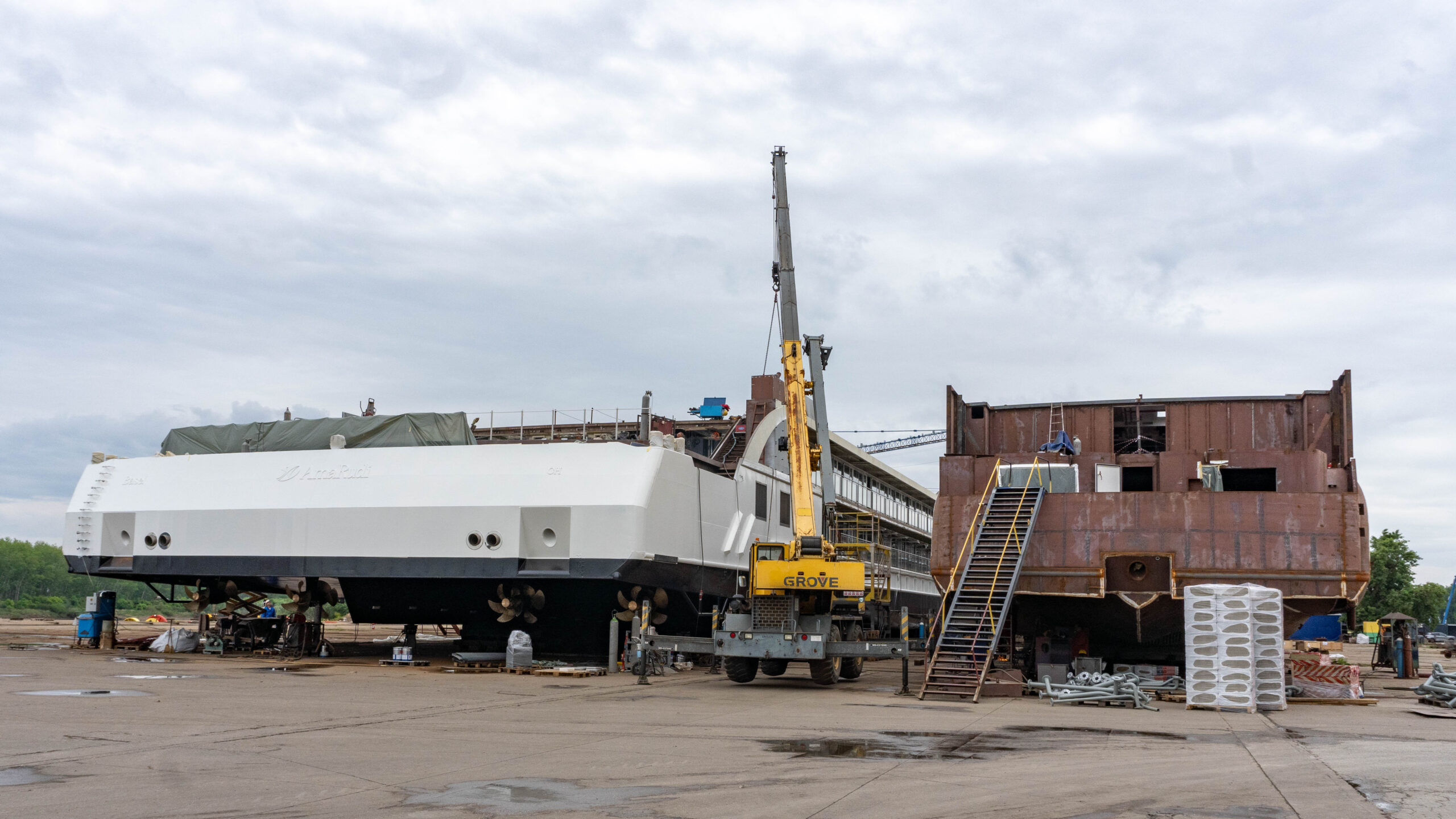
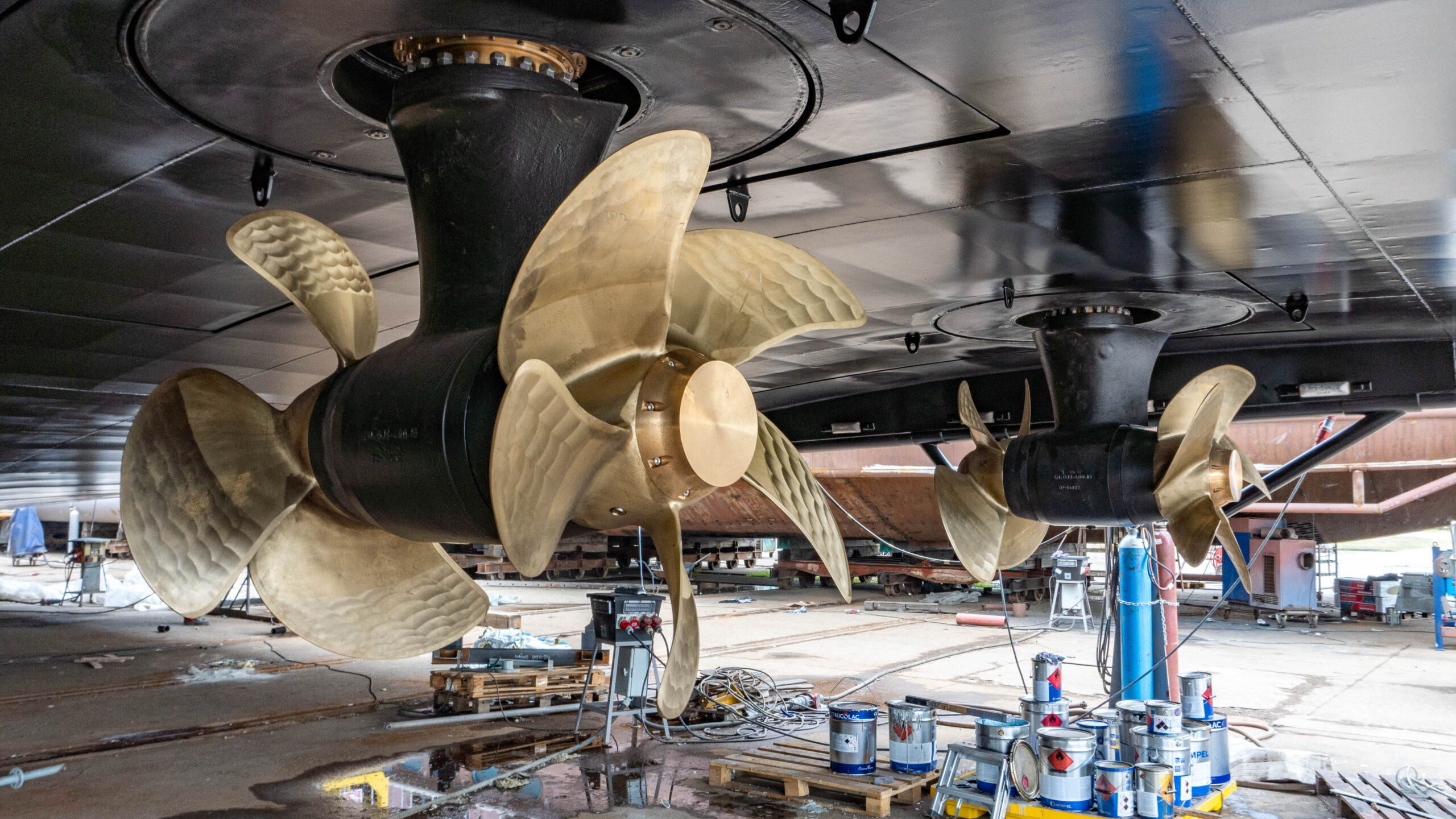
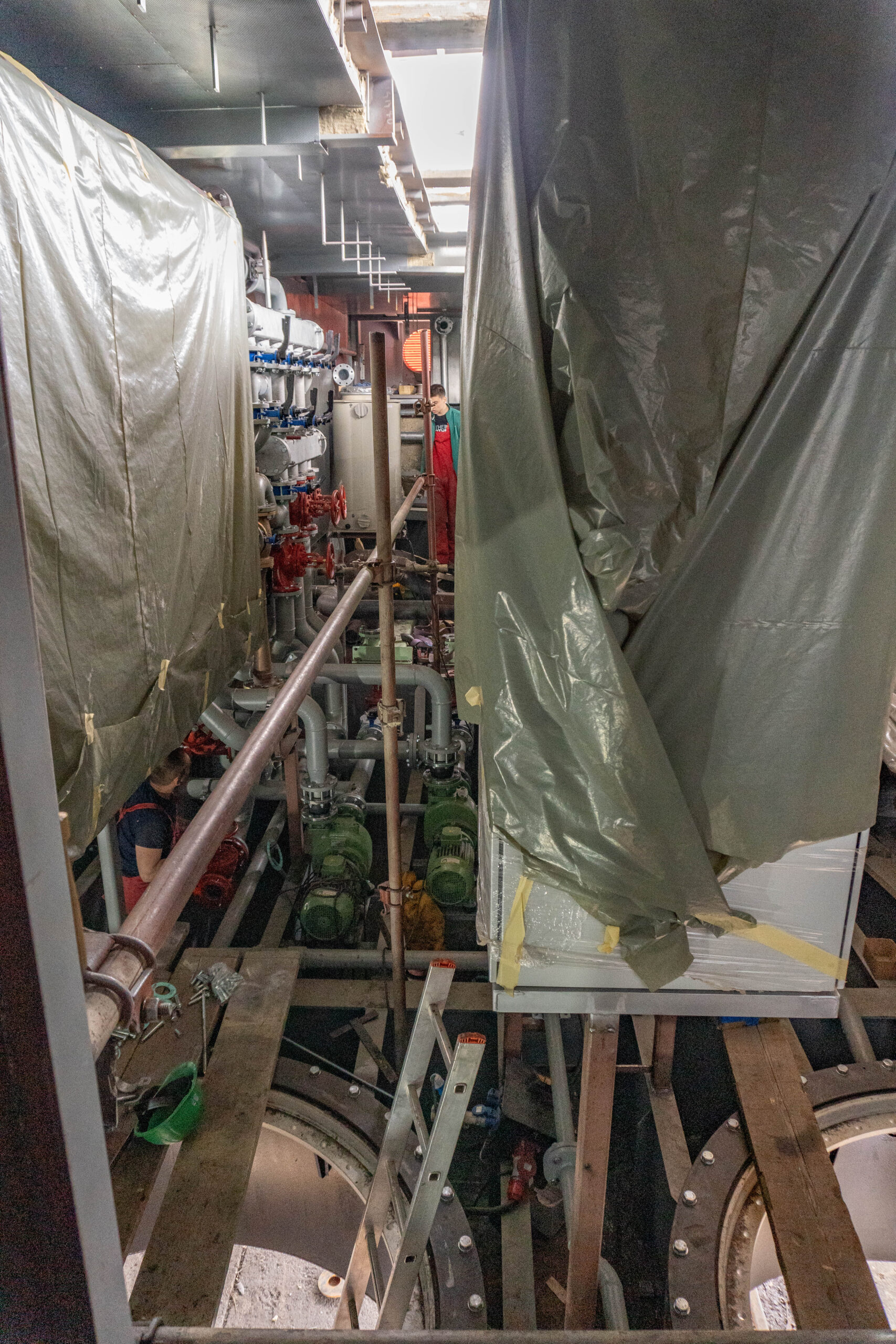
The vessel’s engine room has already been outfitted, and four azimuth thruster units with contra-rotating propellers have been installed. The vessel is currently positioned on the slipway, and following the official launching ceremony, trials using its own propulsion system will take place.
Members of the Department of Naval Architecture of the Faculty of Mechanical Engineering expressed their gratitude to the Vahali shipyard for the warm welcome and the well-organised visit, as well as to their fellow naval architecture engineers for their hospitality. Special thanks were extended to colleague Ivan Kolarik, who patiently guided the participants though the shipyard and answered all of their questions.